Yes, almost all Chinese dramas are voice dubbed
When I first started watching C-dramas eons ago, I admit the obvious dubbing of every actor’s voice bothered me.
After all, I have watched dramas from all over the world for decades, and few countries have their dramas dubbed in their native language like they almost all do in China. (Around 90% of C-dramas use voice actors for dubbing).
Now, decades later, I am so used to watching actors in Chinese dramas with obviously dubbed voices (heck, half the time, the lip movement doesn’t even remotely match the words being spoken), I don’t pay it a second look.
But, for you, if you are new to Chinese dramas, or that obvious voice dubbing still bothers you when you watch your favorite Chinese actor, here then is what you need to know about dubbing in C-dramas, why it’s done and… how you can tell if your favorite actor has dubbed his own voice, or a voice actor has done it for him/her.
The Art of the Voice: Why Dubbing is Standard in Chinese Dramas
For international viewers, one of the most noticeable quirks of Chinese television is the consistent use of dubbing.
While Western audiences are accustomed to on-set, synchronous sound (known as “production audio”), in China, dubbing is not a sign of failure but a standard pillar of professional production.
Far from being an afterthought then, even if it might seem like it to you, it is actually an integral part of the post-production polish.
The Practical Reasons for Voice Dubbing in C-dramas
The primary reason for dubbing is environmental ie: noise.
China’s massive film and television bases, like Hengdian World Studios (one of the world’s largest film studios), not only have several dramas filming at the same time, but they are also bustling tourist attractions.
Because of this, it is nearly impossible to shut down multiple historical streets to silence a squad of tourists, actors’ voices coming from another set, or the rumble of an air conditioner.
RELATED: What is the completion rate for C-dramas by Chinese viewers? Probably lower than you think
Furthermore, many historical epics and wuxia (martial arts) dramas require actors to wear heavy, noisy costumes or perform wire stunts where the pulleys and harnesses create hugely distracting sounds.
Chinese Linguistic Standardization
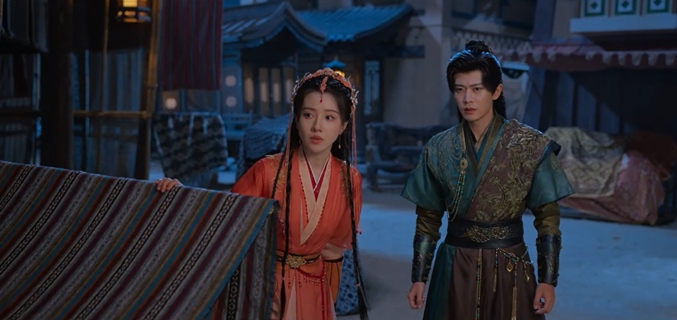
Unlike dramas coming out of my home country of the UK, America, Australia, or Canada, Chinese production companies (and apparently viewers) want the Chinese accent in dramas to be completely uniform.
That is because China has a vast linguistic landscape. So much so, even A-list actors may speak with a heavy Sichuan, Cantonese, or Northeastern accent.
Since the national standard for broadcast media is precise Putonghua (ie: Standard Mandarin), voice dubbing in a drama ensures that a palace drama set in Xi’an is as understandable to a viewer in Shanghai as it is to one in Beijing.
Dubbing actors themselves only have a job if they maintain strict pronunciation standards. Thus eliminating regional inflections that would break the illusion for a national audience.
Performance Refinement
More than I think in any other drama in the world, acting on a Chinese set is often a visual art.
That is why Chinese actors are not only hired for their star power but also for their facial micro-expressions, and their physicality (how many heavy-set A-list Chinese actors have you seen? Exactly. None).
In other words, a substantial percentage of them do not have the acting skills that would be required in a drama in the UK or the United States. Sorry, but they just don’t.
Because of this, after the filming has ended, a professional voice actor (or the actor themselves) re-performs the lines in a soundproof studio.
This allows the director to adjust the emotional delivery, fix script changes made after filming, or add dramatic echoes and reverb that cannot be captured on location.
And those are the main reasons why just about every Chinese drama features dubbed voices.
Now, let’s look at how you can tell if a professional voice actor is dubbing your favorite actor, or if the actor is dubbing themselves.
The Detective’s Guide: Is the Actor Dubbing Themselves?
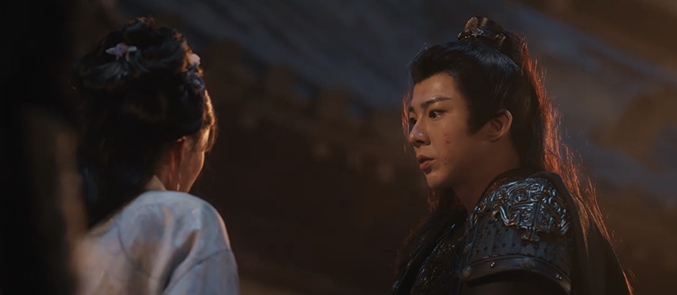
For the curious viewer, telling whether the face on screen matches the voice in your ear involves a bit of audio detective work. Here then are the four key clues to look for.
1. The “Breath Test”
When an actor dubs themselves (a process called “on-site dubbing” or “same-scene pickup”), they re-experience the emotion. Listen for ragged breaths after a fall or the natural gasp before a sob.
If the voice is perfectly clean, like a silk ribbon over a microphone, but the character is supposed to be out of breath, a professional voice actor (who wasn’t physically exhausted) likely handled it.
2. The Pronunciation of “Retroflex” Sounds
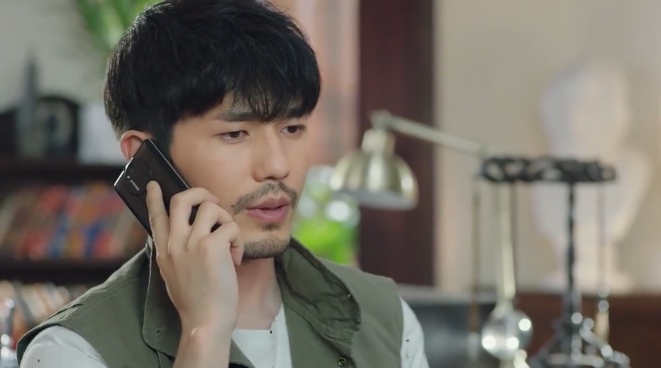
Modern Mandarin has specific retroflex sounds (zh, ch, sh) versus non-retroflex (z, c, s).
Many Southern Chinese actors struggle with this distinction. If a character speaks absolute, textbook-perfect “zh, ch, sh” but the actor is known to be from Shanghai or Hong Kong, that is almost certainly a professional dubber and not the actor himself.
Conversely, if you hear a slight, charming imperfection in the retroflex sounds, you are likely hearing the actor’s own voice who is speaking after some coaching.
3. Match the Vocal “Weight” to the Body
This is a visual-audio cross-check. Professional dubbers often have thinner, more “pure” theatrical voices.
Action stars (like Zhang Ruo Yun or Yang Yang) often dub themselves and, because of that, their characters’ voices carry a muscular breath support, ie: a slight grit or weight that matches their actual physique.
If a muscular general speaks with a light, youthful, anime-like tone, it is likely a professional dubber. If the voice feels heavy and sits deep in the chest, it is probably the actor.
If you are still unsure, head to YouTube and look for a video of your favorite actor in an interview. You may be surprised at how drastically different their voice sounds than what you hear on film.
In my opinion, most actors sound much better with their real voice than the voice that is dubbed for them on film as, frankly, oftentimes that dubbed voice just doesn’t “fit”.
Then again, I am not Chinese, so am not worrying about how annoying a certain accent sounds when all I want to hear is perfect Mandarin Chinese.
Note: It is actually changing in China, where Chinese audiences are now pushing for actors to use their own voices.
4. The Lips: The 90% Rule
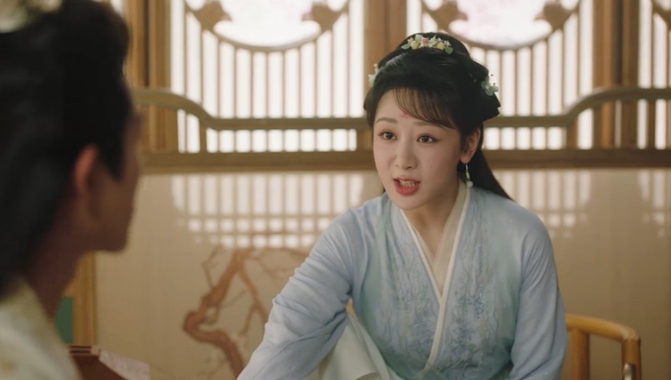
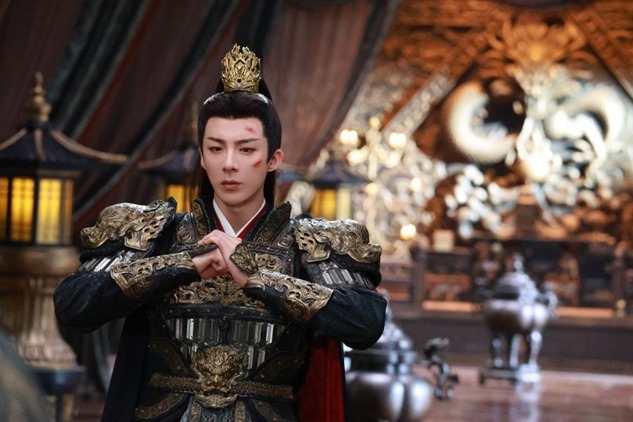
You will almost never see 100% lip-sync accuracy in a dubbed Chinese drama because Chinese voice actors record after the picture is locked. However, watch for the tightness of the jaw if you are unsure if an actor is dubbing his own voice or not.
Self-dubbed: When actors do their own ADR (Automated Dialogue Replacement), they watch their own lips move on screen.
Because they move their lips in the same way as they did while saying the lines on set (every single person moves their lips in a way that’s unique to them when they speak), they tend to replicate the jaw tension exactly. That results in a sync accuracy of about 95%.
If a voice actor dubs the voice, it doesn’t.
Professional dubbers: They breathe life into the character but lack the actor’s specific jaw muscle memory. You will see the actor’s jaw relax or close slightly faster than the voice finishes. That proves it’s a voice actor providing the voice.
In other words, it looks like a 90% sync, so is close enough for flow, but slightly too “loose” to be real.
5. Identical Voices
Many C-dramas share the same small pool of professional voice actors. That means, if a main lead sounds exactly like a main lead or supporting character from the last five shows you watched, yep, it’s a professional dubbing actor providing the voice.
Unless it’s an actor who always provides his own characters’ voices, of course.
6. A Final Clue: The Credits
And, if you are still not sure, then the obvious method is the surest and the easiest.
If you understand Chinese, in the opening or closing scroll, look for the credit 配音演员 (Dubbing Actor). If it lists the same name as the main actor, they dubbed themselves.
If it lists a stranger, like the famous dubbing stars Bian Jiang (边江) or Ji Guanlin (季冠霖), you have found your ghost artist.
If you don’t speak Chinese, My Drama List usually lists the voice actors who voiced each part at the bottom of the cast list for every drama.
About the Author