
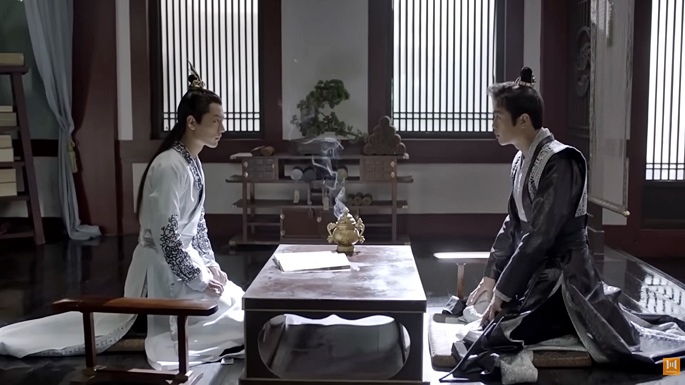
One of the first things I noticed when I began watching Chinese dramas years ago is that rain and wet floors are very often featured in many wuxia or xianxia scenes.
Something that bothered me for a while as I saw beautiful gowns being dragged through rain-covered streets and equally wet courtyards, while fight scenes took place in teeming rain causing martial artists to slip and slide around.
Being a bit of a clean freak myself, I couldn’t figure out why so many Chinese directors seemed to be obsessed with things being wet.
Until I watched more closely, did some research and realized that, while there was an aesthetic reason for the Chinese’ seeming obsession with water, directors used the recurring visual motif for other reasons as well.
Namely, for cultural, aesthetic, symbolic and narrative significance.
1. Aesthetic and cinematic beauty
One of the main things Chinese visual arts (painting, poetry, cinema etc) value is creating a specific “mood” or “conception.” Rain and wet surfaces achieve this beautifully in two particular ways:
Reflections and light: A wet floor turns into a mirror, reflecting lanterns, moonlight, or a character’s silhouette. This creates a dreamlike, poetic, or melancholic atmosphere, and amazing depth to a scene.
Something a drama like the hugely popular Joy of Life (above) used to an extreme, as even many indoor floors were soaking wet.
Muted colors and contrast: Water darkens stone, wood, and fabric, making colors appear richer and more dramatic. A lone figure in a bright costume against a dark, wet street, for instance, looks strikingly beautiful.
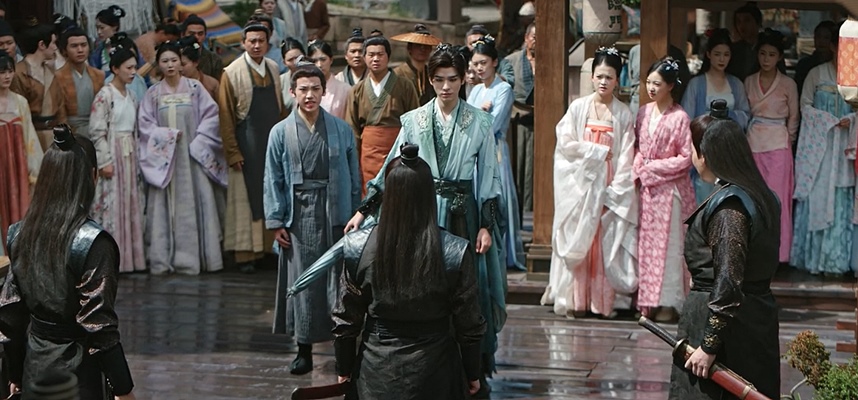
2. Symbolism: Rain as inner turmoil or injustice
In Chinese culture, rain is rarely just weather because, as you might have guessed, the Chinese soul is often quite a bit more melancholic than our own.
That’s why rain in C-dramas often symbolizes one or more things to Chinese viewers, and to the people involved in the production of a drama.
Grief or sorrow: So-called “tears of the heavens” mirroring a character’s pain. That’s why a sad scene in a Chinese drama without rain might feel quite a bit less sad.
Injustice: In historical/C-drama logic, when an innocent is wrongfully executed or a great betrayal occurs, it must rain (often even a thunderstorm). After all, with something so terrible happening, heaven must be weeping.
Emotional awakening or catharsis: A character standing in rain might represent them bearing the weight of the world. Either that or “washing away” illusions/obsessions.
Transition or loneliness: Rain isolates people, forces them indoors, or makes farewells more poignant. You will see rain in Chinese dramas then when a character has been isolated from people he cares about.
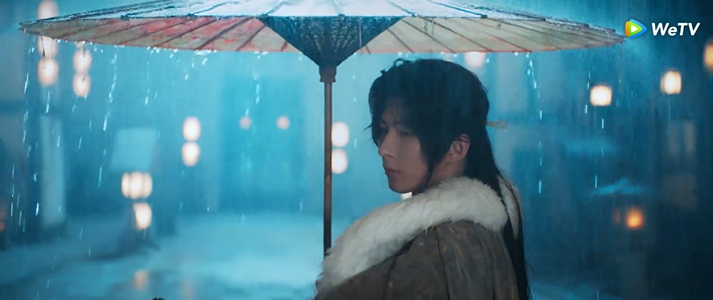
3. Wet floors and dragging costumes
Like me, you have probably noticed hundreds if not thousands of scenes in C-dramas where a character’s long costumes are dragging through puddles as they walk.
While supremely annoying to a clean freak like me, this is actually intentional on the part of the director and design staff, as it suggests several things.
Wealth and impracticality: In historical settings, long silk or brocade robes dragging on wet ground showed status. After all, the people wearing them could afford to ruin expensive fabric, so why should they worry about it?
Yes, it’s impractical, but it’s not just the Chinese in certain historical periods who wore clothing that way, as look at Victorian aristocrats’ and their long trains.
Sacrifice and vulnerability: When you see a noble character in a Chinese drama walking through mud/water without concern, doesn’t it suggest to you that the person is above petty comfort?
Either that or they are enduring suffering with dignity.
The “wet hem” as a visual cue: In many wuxia/xianxia dramas, a soaked, dirty hem is the only visible sign a character has traveled far, suffered, or fought. It’s subtle storytelling and means the screenwriter doesn’t have to force a character to say so.
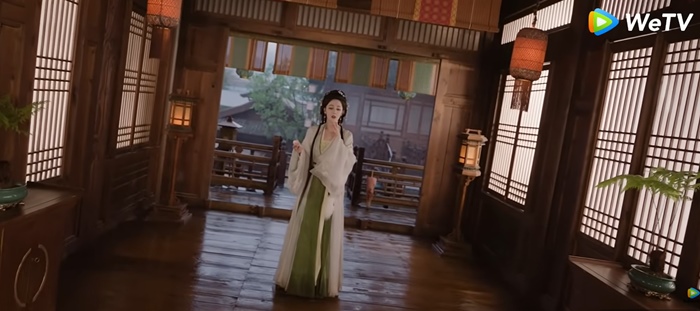
4. Cleansing and ritual purification
Rain in Chinese thought (which, among other things, is influenced by Daoism and folk beliefs) can wash away “dust”. That is to say literal dirt but also things like mundane concerns, bad luck, or worldly attachments.
In a Chinese drama then a scene that takes place after rain often signifies a new beginning or clarity.
5. Practical filmmaking reasons (Less romantic but no less real)
Of course, when you get away from all the symbolism and aesthetics, sometimes having wet streets or pouring rain is often nothing more than a practical solution to a problem.
Night scenes: Wet streets reflect light better, making night filming easier and more visually interesting than dry asphalt/stone.
Concealing set imperfections: While Chinese set design is often spectacular, like any other set design it does still have flaws. Water can hide seams, dirt, or modern details on a historical set, so no wonder we see it often, eh?
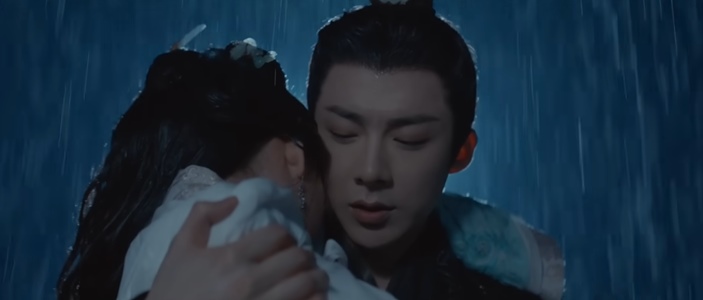
Genre expectation: Directors know audiences have come to expect emotional climaxes or fight scenes in the rain as they feel “more epic”. So much so, it has become a language of the genre.
Sure, it may be being a bit overused but, I will bet you, if Chinese dramas suddenly did away with all the rain and wet alleyways, there would be a huge uproar from fans of the genre worldwide.
6. It’s not just in C-dramas
Of course, while not as common, the use of rain and wet streets in dramas is not unique to China. Think of American film noir’s rain-slicked streets, or Japanese anime’s dramatic rain scenes.
But, having said that, Chinese dramas do use it more pervasively and symbolically, and across many different genres.
In other words, while rain in Western media often just means “bad weather”, from the Chinese, it almost always means something about a character’s soul.
In short, the huge number of times we see rain or wet floors in Chinese dramas is not a director’s obsession but, instead, they are used as emotional poetry to suggest emotions like grief, injustice, anger, separation and longing. Or even just simple beauty.
And now that I have pointed out some of the reasons for wet streets and pouring rain in C-dramas, you will notice it more.
And, when you do, you will start to see it in almost every major C-drama emotional climax. And you will know why the director insisted on pouring water on that street.
Now, just don’t get me started on that enormous dry cleaning bill when the drama wraps filming, eh?
About the Author