

I came across the term “cloud seats” by accident a couple of years again while scrolling through Chinese social media, and seeing that term pop up again and again.
Then, as I researched this phenomena further, I fell down a rabbit hole.
Thirty yuan. Free memberships. Fans paying so strangers can watch C-dramas starring their favorite actors. Dramas generating millions of dollars from seats that don’t physically exist.
And I’ve been turning it over in my head ever since, because I genuinely don’t know what to think. Or the morality of it.
What I’ve Learned about “Cloud Seats” for C-dramas
Let me make sure I explain this correctly, because the first time someone explained it to me, I thought I was missing something. You might do as well.
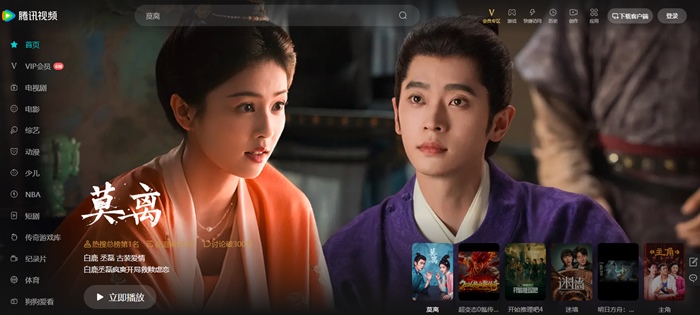
In China, when a new drama premieres on platforms like Tencent Video or iQIYI, fans can apparently buy what are called “cloud reserved seats” (云包场).
Each seat costs about 30 yuan (roughly $4 USD), though a newer “SVIP” version costs 50 yuan (about $7). These aren’t tickets for themselves, however, they are streaming platform memberships to a specific platform (Tencent, iQIYI etc) that run for two weeks to a month.
They are given to strangers.
The catch? To claim the free membership, the stranger must watch the C-drama that the fan is buying tickets to promote for 10-20 minutes first.
Due to that watch, the drama then gets a boost to its “heat index”, which matters enormously for how the show is perceived when it has first released.
Meanwhile, the streaming platform gets paid. The fan gets the satisfaction of having supported their favorite actor/actors. The stranger gets a free two weeks to a month of streaming content.

Cloud Seats are big business in China
And this is apparently a massive industry in China.
According to my research, as of 2025, 48 dramas have surpassed 1 million yuan ($148,000) in cloud seat spending.
The record holder, Legend of Zang Hai, generated nearly 12 million yuan (about $1.65 million USD) from cloud seats alone.
This article on TMTPost in Chinese, (run it through Google Translate), explains that record, as well as talks about the problems related to cloud seats.
And now, I keep re-reading that number. Twelve million yuan. For digital seats. For just one drama.
The Part About Cloud Seats That Makes Sense to Me
Now, before I diss them, I should be honest: I can see why cloud seats caught on.
Especially as Western fandoms do similar things, just often less formally. Well, unless it’s someone like Taylor Swift, and then it’s as formal as formal can be.
I’ve been in fan spaces in Europe, for instance, where wealthier members bought extra copies of an album or digital singles their favorite singer just released, specifically to give away to other fans. (I didn’t. I’ve better things to do with my money!)
I’ve seen organized efforts to stream songs on repeat to boost chart positions. I used to be part of a fandom for an Austrian singer where fans bought hundreds of digital copies of his singles to push him to #1 in that small market.
The impulse is the same. The packaging is just different.
And I can’t pretend the free membership angle doesn’t have some genuine upside either.
A student who can’t afford multiple streaming subscriptions gets a free ‘cloud seat’, and might actually discover a drama they love. Someone on the fence might give a show a chance they would otherwise skip. The fan gets to feel like they’ve “gifted” something real, and not just inflated a number, but given someone access.
There’s also a weird kind of community to it that I recognize from Western fan culture.
The group chats. The coordinated efforts. The shared celebration when a goal is met. I’ve participated in versions of that myself. It feels good, even when you know the underlying goal is something as cynical as “improve a corporation’s metrics.”
I was also fascinated to learn that, yes indeed, some Chinese actors sometimes buy seats for their own fans, or even reward top spenders with prizes.

The Part About Cloud Seats That Gives Me Pause
But the more I read, the more I found myself frowning at my screen.
“Ransom” is how some industry insiders describe it now.
Apparently, when a drama underperforms , ie: when ratings are soft or audiences aren’t showing up, platforms will sometimes pressure production teams to “make up the difference” with cloud seats.
The Litchi Road (which is a superb drama that didn’t get the attention it should have done), for instance, had 24 brand advertisers and massive expectations.
It got mediocre reviews and weak ratings. And then it started dropping 20,000 to 30,000 cloud seats daily. Not as a promotion, however, but as penance.
That word stopped me cold. Penance. As if poor performance is a sin that must be paid for.

The Social Pressure on Chinese Fans Sounds Intense.
Now, I’ve seen Western fan drama, the kind where people get harassed for not streaming enough or not buying enough albums. But the practice of cloud seats in China sounds next level.
Fan groups apparently keep public records of who has contributed. They turn on members who don’t spend enough. Teenagers reportedly skip meals to afford seats.
I don’t know how widespread that is. I hope it’s the exception.
But even if it’s only a minority of fans, the system is structured to encourage it. Platforms introduce higher-priced tiers. Fans compete to show devotion. And the people least able to afford it are often the most vulnerable to the pressure.
If it was me, I would tell these people to go eff themselves, as I will do/not do whatever I want with the money I earned. Then again, I’m not a teenager and I’m not Chinese. In a country where conformity is both the norm and celebrated.
The Streaming Platforms are the Only Guaranteed Winners
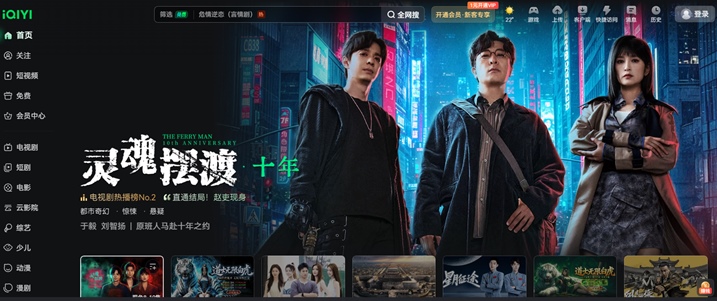
This is the part that sticks with me. When a fan buys a cloud seat, where does the money go? The platform keeps almost all of it. No manufacturing. No shipping. No inventory. Just a line of code generating revenue.
The production company gets nothing directly.
The main actors, and the rest of the cast and crew who worked damned hard to create that C-drama, get nothing directly.
Meanwhile, the fan who paid for the cloud seats gets — what exactly? A fleeting sense of contribution? A screenshot to post on social media? A rare chance at a prize, in some instances, if they’re among the very top spenders?
The platform wins every single time. And the platform has done nothing except exist.
The viewing data, therefore, is now meaningless.

C-drama Viewership is Often Manipulated
I work with numbers enough to know that once you introduce paid manipulation into any metric, that metric stops being useful.
If a drama’s “heat index” includes minutes watched by people who only showed up for a free membership, minutes that were paid for by fans or production teams, then that index is measuring spending power, not genuine interest.
The Litchi Road proved this. All those seats. All that forced viewing. The ratings didn’t budge. The show still failed with actual audiences.
So what are these numbers even for?
Why does the industry continue to treat them as meaningful? And what happens when a genuinely good drama without wealthy fans gets buried because it can’t compete with artificially inflated competitors?
The Question of “Should Cloud Seats Be Allowed?”
This is where I get genuinely stuck.
Part of me thinks: it’s a free market. Fans want to spend their money on this. No one is forcing them. The platforms are providing a service. Somebody who might not have been able to afford a streaming service membership gets a few weeks of one for free.
Who am I, as an outsider, to say it shouldn’t exist?
Another part of me thinks: but the system does force them, indirectly. The social pressure. The normalized expectation. The way fandoms have turned seat-buying into a basic responsibility rather than an optional extra.
At what point does “voluntary participation” become “coerced participation”?

Regulation in the West versus Little Regulation in China
And then I think about how this would be regulated in the west.
The FTC in the United States has rules about undisclosed paid promotions. The ASA in the UK regulates misleading advertising.
If a streaming platform in the US allowed fans to pay to inflate a show’s viewership metrics without clearly disclosing that those views were purchased, would that run afoul of consumer protection laws?
Very likely. Yes.
I also suspect there would be hearings. Lawsuits. A whole complicated legal conversation about what constitutes “deceptive trade practices” when the deception is baked into the platform’s own metrics.
On the other hand, western platforms already allow things that feel adjacent.
YouTube counts views to a video after just 30 seconds. Come on, no matter what you like to think, you didn’t watch the video if you bailed at half a minute. Spotify playlists can be influenced by promotional spending. Billboard changed its rules multiple times to address bulk digital purchases. The line between “promotion” and “manipulation” is blurry everywhere.
China then just made the blurriness explicit. They gave it a name, a price tag, and a user interface.

What I Keep Coming Back To About Cloud Seats
I’ve been trying to decide whether I think cloud seats for Chinese dramas are a net good, a net bad, or just… different. And I keep landing on a question I can’t answer.
Is fandom supposed to be transactional?
Because what bothers me most about cloud seats isn’t the spending itself. After all, Western fans spend enormous amounts on merchandise, concert tickets (which are ridiculously expensive in the west nowadays), meet-and-greets, fan clubs.
None of that is new.
What bothers me, though, is that cloud seats don’t give the fan anything except the feeling of having contributed to a number. No merchandise. No content. No experience. Just the satisfaction of watching a heat index climb.
That feels different to me. Not illegal. Not obviously immoral. But… hollow.
And yet. The fans who participate describe genuine joy. Community. Purpose. Who am I then to tell them their joy is less valid than someone who buys a t-shirt or a concert ticket?
I don’t have an answer. I’ve been circling this for a while now, and I still don’t have an answer.

Where I Land About Cloud Seats (For Now)
If you asked me today whether cloud seats should be allowed then, I’d probably say yes. But with caveats.
I think platforms should be required to disclose when heat index numbers include cloud seat-driven views. I think there should be limits on how much a single drama can benefit from purchased views before the metric is labeled differently. I think there should be protections for younger fans who are most vulnerable to social pressure.
But outright banning? That feels heavy-handed, especially from an outsider looking in at a culture I don’t fully understand.
What I land on instead is this: I’m glad I don’t have to make the decision.
I see the positives — community, access, the genuine joy of collective effort. I see the negatives — coercion, polluted data, platforms profiting from devotion. And after all of it, I still don’t know exactly what I think.
So, maybe that’s the honest answer. For now.
Not every practice needs a firm judgment from someone standing outside it. Some things are complicated. Some things exist in the gray spaces between “good” and “bad.” Some things work in one cultural context in ways that would fail, or even harm, in another.
So, no, I’m still not sure cloud seats are good.
I’m also not sure they’re evil.
I’m sure they’re fascinating. I’m sure they’re profitable. I’m sure fans will keep buying them and platforms will keep selling them.
And I’m sure that the next time someone mentions “cloud seats,” I’ll lean in a little closer, because I still haven’t figured out how I feel.
Maybe that’s the point. Maybe some practices exist not to be judged, but to be understood.
I’m still working on the understanding part.
The judgment? All I can say is I’m holding off. For now.
About the Author