As someone who was recently the subject of personal attacks by C-drama fangirls on a western platform focused on Asian dramas simply because I shared my opinion about a specific Chinese idol actress’s less-than-stellar performance, I am well aware there is a substantial segment of the Chinese drama community that is unhinged and toxic.
But, if you think the toxicity within the international Chinese drama community is bad, you should see the magnitudes of awfulness that take place within C-drama communities in China.
Awfulness that has become so destructive over the last few years, the Chinese government is now clamping down on it as, if not stopped, this kind of toxic behavior can be incredibly detrimental to a society and to the mostly young people who engage in it.
Here then is a look at the problems of China’s “fandom” culture, and what Chinese authorities are doing to stop it dead in its tracks.
Toxic C-drama fan culture in China
The challenges posed by certain fans of Chinese dramas are a recognized issue in China, and largely stem from the rise of highly organized and emotionally invested “fandom” culture, often referred to as “fan circles” (“饭圈” in Chinese).
The core problems of these fan circles, which feature large groups of people all across China, are their constant interference in creative processes, the spread of online conflict between fan groups, abuse of the actors themselves, and the distortion of healthy industry evaluation systems.
Here then is how that plays out.
Script Alterations – Prominent figures in the industry, such as screenwriter Zhao Dong Ling (Winner), have been pressured by streaming platforms to alter scripts to better suit “traffic actors” (the term used in China for actors with massive fan followings).
This can mean simplifying roles or storylines to suit a specific actress as, otherwise fans of that actress will protest if her role in a drama doesn’t meet their expectations.
(Note: Zhao Dong Ling has refused to do this so, if you do watch one of her many dramas, you can be secure in the knowledge that fangirls had no impact on the plot).
Internationally-known actress He Sai Fei (Women of the Tang Dynasty) also recently shared an experience where she was asked to minimize her scenes to avoid upsetting a co-star’s fans with the result that most of her role disappeared, and her substantial role ended up being nothing more than as a background actor.
Battles Over Billing (Fan Wars) – Fierce competition over actor billing (the order in which actors’ names appear) has also become a major source of conflict. (And a more stupid waste of your time, I cannot even imagine, can you?)
As a result, fans of different stars have launched large-scale online attacks in the past to demand better placement in drama credits for their idol.
A practice that has become so disruptive industry associations have finally issued formal regulations that will stop it — regulations that are based on the legal name of the actor.
C-drama fans’ online conflict and social disruption
The Chinese fandom model, which is often characterized by high organization and data-driven loyalty, has also been linked to various forms of online misconduct. Something that started out as a huge problem and has only become bigger in recent years as fans of specific actors seek to manipulate everything about a drama their favorite actor stars in.
For instance…
Manipulation of Public Opinion – C-drama fans in China often engage in coordinated actions like “controlling comments” (flooding comment sections with positive messages), giving “malicious negative reviews” to rival productions, or filing mass reports against online content they dislike.
As Chinese authorities stress, this creates an incredibly toxic environment and undermines the credibility of viewer ratings. It also needs to stop.
Social Disruption and Privacy Violations – In extreme cases, such collective online behavior has escalated into real-world problems.
Some fans, for instance, have been involved in doxing, stalking, and distributing the private information of celebrities, which is considered a severe social issue in China (as it should be in any country, in my opinion), and patently illegal.
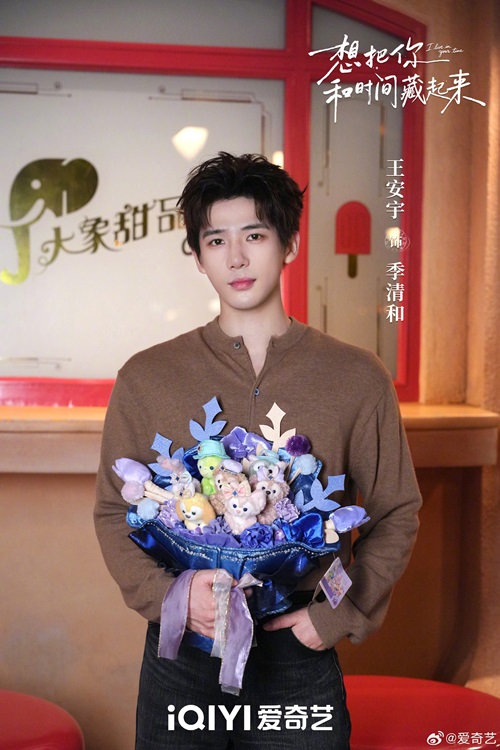
Zhang Yu Xi, for instance, was harassed and persecuted by two groups of obsessed fans, including one group that intruded on a property registered under her name, and a stalker who followed her for months. She is now threatening legal action. (If it was me, I wouldn’t be threatening. I’d have my lawyer on speed dial, wouldn’t you?)
Because of this type of stalker behavior, Chinese authorities have launched campaigns to specifically target such irrational fan behaviors, with fans being fined and, in at least one case, imprisoned. (A Chinese fan bought celebrities’ private flight information from an airline contractor and then sold it to other fans so they could stalk their favorite celebrities before and after their flights. That fan received a 7-month prison sentence).
The Supreme People’s Court has also recently emphasized the need to punish violators for crimes like online defamation and insult, which can be punishable by prison terms of over one year.
It does not seem to have yet been applied to more toxic C-drama fans online but, in my opinion, if it was, you would rapidly see much of this behavior stop. And yes, I do fully expect it to eventually be implemented against the craziest of Chinese C-drama fans as well.
The distortion of C-drama industry standards
Another problem with toxic Chinese drama fans in China is that, in the last few years, the immense commercial power of large, mobilized fan bases has encouraged streaming platforms and production companies to prioritize “traffic” (ie: the ability to get large numbers of fans to watch a drama) over artistic quality.
Traffic Over Talent – The commercial logic of relying on fans to generate data and spending (often in the purchase of things like cloud seats) leads to casting choices based on an actor’s fanbase size rather than their suitability for a role. It’s a trend the Chinese state broadcaster has criticized, and one that is slowly destroying the quality of Chinese dramas.
Compare a typical Chinese drama to a typical Korean drama, for instance, and you will see Korean actors actually suitable for their roles, while Chinese dramas continue to shove in the same idol actors, some of whom simply cannot act, just to suit a specific actor’s fanbase.
And actors, I might add, that will eventually disappear anyway as they now appear in so many dramas, they are becoming oversaturated.
A Self-Perpetuating Cycle – This model of kowtowing to an actor’s fans then tends to create a vicious cycle: scripts are tailored to “traffic actors,” which continues to draw in the core fans, while the artistic integrity of the work continues to collapse, and so fewer people end up watching it.
Ultimately, this can also backfire for both fans and the actor they support as production companies are getting tired of being the targets of abusive behavior from specific actor’s fans.
In that case, why hire that particular actor to start with? Especially when there are many other actors, versus currently dwindling roles available in big-budget productions.
What is the Chinese government doing to stop toxicity in the Chinese drama world?
Due to the toxicity within the C-drama community in China becoming an ever-increasing problem, in the last few years both the Chinese government and industry bodies have taken steps to regulate the behaviors of C-drama fans.
These actions are part of a broader effort to curb toxic fan culture and are designed to address issues like fan conflicts, irrational support, abuse of actors, and the manipulation of online content to the benefit of specific actors and the detriment of others.
The first I mentioned previously, and that is…
Issuing specific industry rules to standardize actor billing credits
This will go into effect in July, 2026 and means that actor credits will be divided into set categories like “Starring,” “Special Appearance,” and “Guest Star.”
In each category, names must then be listed by the number of strokes in the actor’s legal surname, without exception. That’s similar to the alphabetical listing some Hollywood productions utilize and, in my opinion, the only fair way to do it.
Authorities have also obviously chosen legal name, and not the adopted name many actors perform under as, if they chose the latter, you can guarantee some crazy fans would be pushing actors to suddenly change their name to obtain higher billing.
The responsibility of actors and agencies
The new rules also now explicitly require Chinese actors and their agencies to guide their fans toward rational behavior, and to not create fan conflicts over billing disputes.
Severe penalties will ensue if they refuse to do this.
Managing fan communities
In 2022, the National Radio and Television Administration (NRTA) also issued rules requiring agencies to manage official fan clubs and accounts properly.
This includes not letting minors be group leaders and preventing the organization of harmful fan activities. Any such fan activities will be punishable with large fines.
Curating content and conduct
The same NRTA rules also now ban the use of marketing accounts to spark fan wars, or to spread misinformation and hateful content.
Additionally, the rules prohibit studios, agencies and actors using rankings, data manipulation, or fundraising to fuel irrational consumerism among fans.
Now let’s hope they clamp down on the cloud seats soon, eh? (As yes, I have now made up my mind on that, and I think it’s toxic).
Shutting down social media accounts
Chinese authorities have also become more strident about banning social media accounts after users have exhibited toxic and abusive behavior.
During a recent crackdown on what they called “fan circle disorder,” the Cyberspace Administration of China (CAC) ordered platforms to shut down or permanently ban specific accounts known for vulgar celebrity gossip and publishing unverified rumors. (For non-Chinese social media users, I find a good rule of thumb is just to immediately block the account on platforms like X).
This demonstrates Chinese authorities’ willingness to directly target problem users who drive toxic fan behavior, and will go a long way to stopping it, as every Internet user knows when one person becomes abusive, others usually pile on.
In addition they have penalized platforms like Weibo, Xiaohongshu (Red Note in English) and Jinri Toutiao who, in the past, have refused to regulate users’ content correctly.
This is especially so when it comes to cyberbullying and the violation of minors’ privacy.
Unfortunately, in the west, we still have platforms like YouTube, X and Asian-drama focused My Drama List that refuse to regulate their users’ behavior, with the result that a sizeable number of people using these platforms are cyberbullies and abusers.
In summary, and even though I am one of those people who believes freedom of speech is important, the Chinese government has recently begun signaling that it will use the full force of the law against C-drama fans’ behaviors like defamation, privacy breaches, stalking and cyberbullying, which are central to what is considered toxic fan culture in China.
And yep, I am fully on board with that. Aren’t you?
About the Author